Psoriasis
Learn about psoriasis causes, symptoms, triggers, and treatment options. Manage flare-ups effectively with expert care at Lovina Clinic.
Book Appointment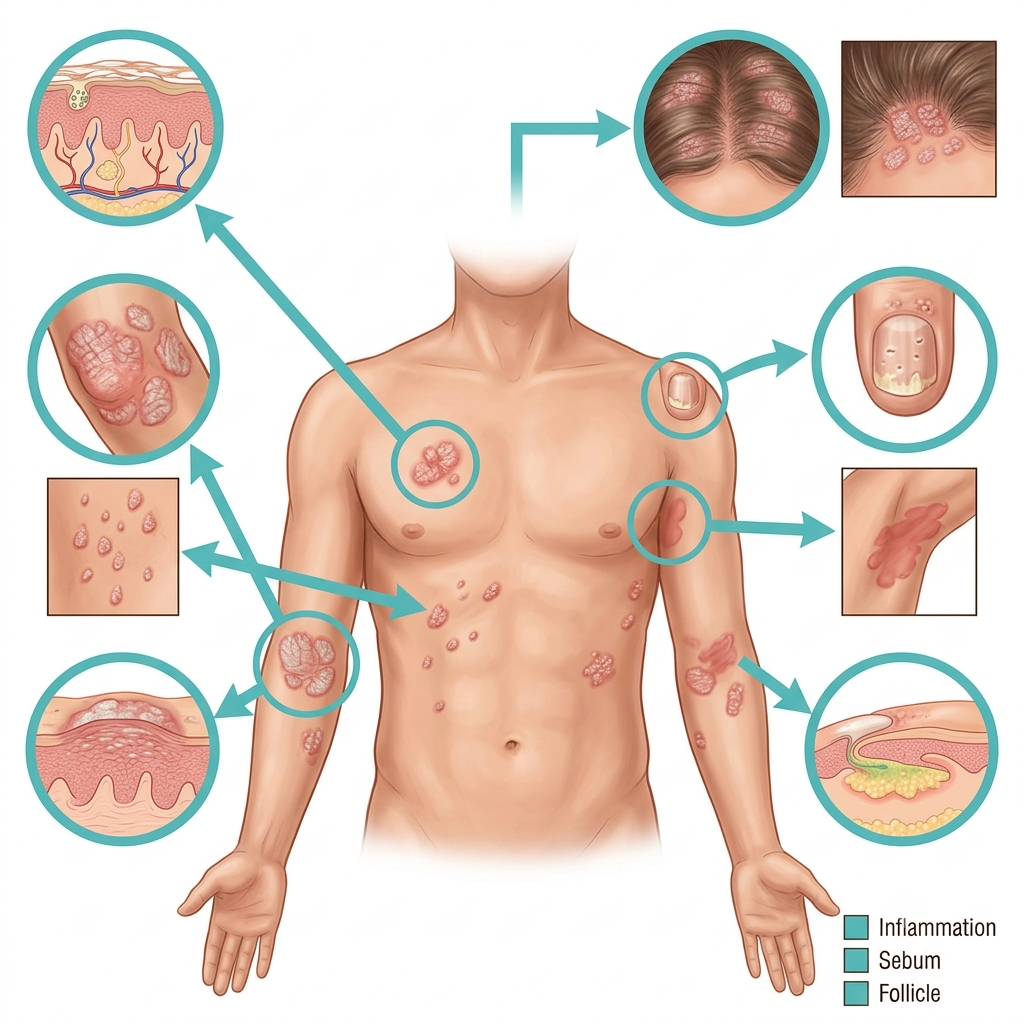
Disclaimer: All information and images are for educational purposes. Please consult a certified doctor for medical advice.
What Is Psoriasis?
Psoriasis is a chronic autoimmune condition that accelerates the growth cycle of skin cells. Normal skin cells mature and shed over a month, but in psoriasis, this process happens in just a few days. The cells build up on the surface, forming thick, red, scaly patches called plaques.
Psoriasis is not contagious. It is a lifelong condition with periods of flare-ups and remission. The exact cause involves the immune system attacking healthy skin cells, and it often runs in families. Common triggers include stress, infections, certain medications, and skin injuries.
Common Symptoms
- Plaques: Thick, red, inflamed patches of skin covered with silvery-white scales.
- Itching and burning: The affected areas can be itchy, sore, or feel like they are burning.
- Dry, cracked skin: May bleed, especially during flare-ups.
- Nail changes: Pitting, thickening, or separation from the nail bed.
- Joint pain: Psoriatic arthritis causes swollen, stiff, and painful joints.
- Scalp psoriasis: Flaky, itchy scalp that resembles severe dandruff.
How Psoriasis Is Diagnosed
Your doctor can usually diagnose psoriasis through a physical examination of your skin, scalp, and nails. They will ask about your symptoms, family history, and any triggers you have noticed. In rare cases, a skin biopsy may be taken to confirm the diagnosis and rule out other conditions.
Psoriasis Treatment Options
Treatment depends on the type and severity of psoriasis:
- Topical treatments: Corticosteroids, vitamin D analogues, and retinoid creams applied directly to plaques.
- Phototherapy: Controlled UVB light exposure slows skin cell growth.
- Systemic medications: Oral or injected medications that work throughout the body.
- Biologics: Targeted therapies that block specific immune system pathways involved in psoriasis.
Treatment aims to reduce inflammation, slow skin cell growth, and remove scales. Most people achieve significant clearance with the right plan.
Common Psoriasis Medications
- Topical corticosteroids: First-line treatment for mild to moderate psoriasis.
- Vitamin D analogues: Calcipotriol — slow skin cell growth.
- Topical retinoids: Tazarotene — normalise skin cell growth.
- Coal tar: Reduces scaling, itching, and inflammation.
- Methotrexate: Oral medication for moderate to severe psoriasis.
- Biologics: Adalimumab, ustekinumab, secukinumab — for severe cases that do not respond to other treatments.
Lifestyle & Home Care for Psoriasis
- Moisturise daily: Thick creams and ointments help reduce dryness and scaling.
- Gentle skincare: Use mild, fragrance-free cleansers. Avoid hot water and harsh scrubbing.
- Sun exposure: Brief, controlled sun exposure can improve symptoms. Avoid sunburn.
- Stress management: Stress is a major trigger — meditation, exercise, and adequate sleep help.
- Healthy diet: Anti-inflammatory foods may help. Reduce alcohol and processed foods.
- Avoid triggers: Identify and avoid personal triggers such as certain medications or skin injuries.
Frequently Asked Questions About Psoriasis
Is psoriasis contagious?
+Can psoriasis be cured?
+Can psoriasis affect more than skin?
+What triggers psoriasis?
+Living with Psoriasis?
Effective treatment is available. Book an appointment at Lovina Clinic for a personalised plan to manage your psoriasis.
WhatsApp Us