Skin Allergies
Learn about skin allergy causes, symptoms, types, and treatment options. Identify triggers and find relief from contact dermatitis and allergic rashes at Lovina Clinic.
Book Appointment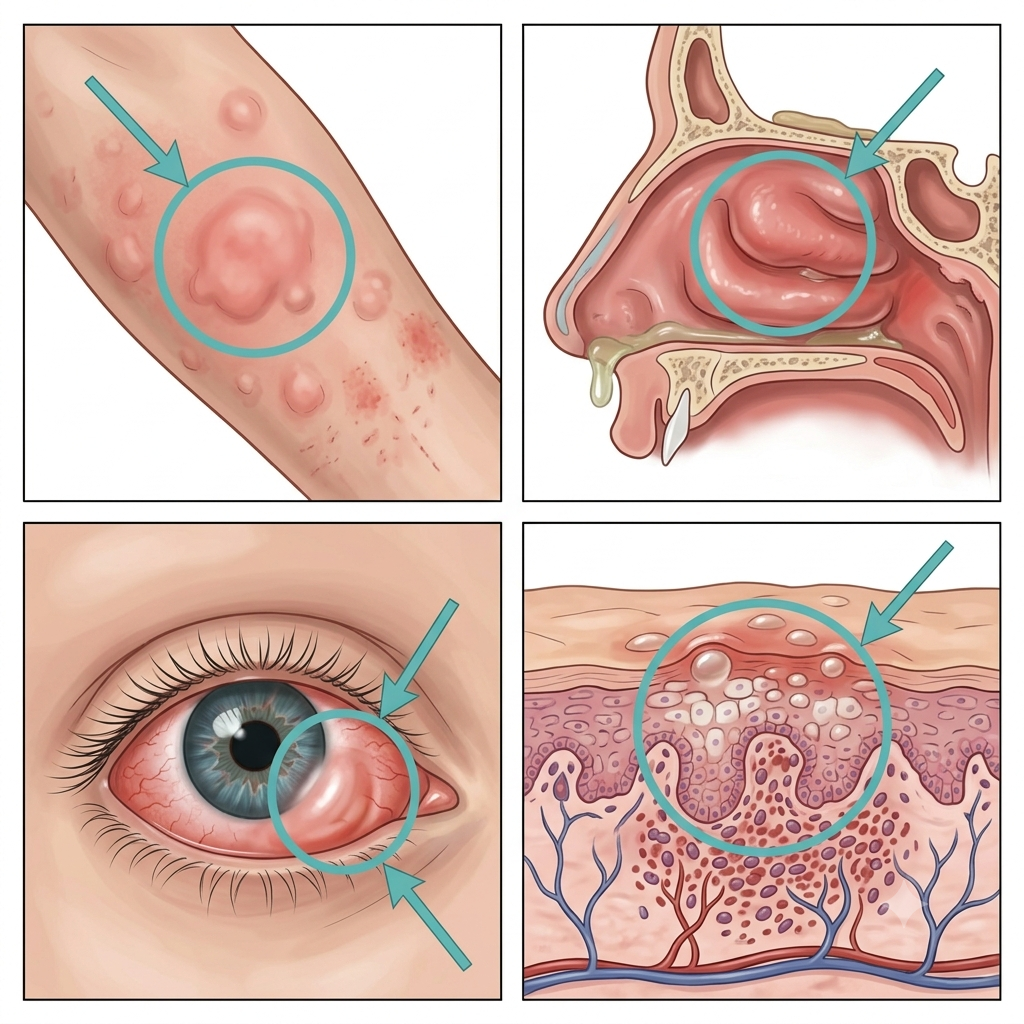
Disclaimer: All information and images are for educational purposes. Please consult a certified doctor for medical advice.
What Are Skin Allergies?
A skin allergy occurs when the immune system overreacts to a normally harmless substance (allergen), causing inflammation, redness, itching, and rashes. Skin allergies can be triggered by direct contact with an allergen (contact dermatitis), ingestion of food or medication, or inhalation of airborne allergens.
Common types of skin allergies include allergic contact dermatitis (from touching allergens like nickel, fragrances, or latex), atopic dermatitis (eczema triggered by allergens), and urticaria (hives). Identifying the specific trigger is essential for effective management.
Common Symptoms
- Red, itchy rash: Appears at the site of contact with the allergen.
- Bumps or blisters: Small, fluid-filled bumps that may ooze and crust.
- Swelling: Localised swelling around the affected area.
- Dry, cracked, scaly skin: Especially with repeated exposure.
- Burning or stinging: The skin may feel warm or tender.
- Delayed reaction: Contact allergy symptoms often appear 24 to 48 hours after exposure.
How Skin Allergies Are Diagnosed
Your doctor will take a detailed history of your symptoms, including when they started, what products or substances you were exposed to, and any patterns you have noticed. Patch testing is the gold standard for diagnosing contact allergies. Small patches containing common allergens are applied to your back and left for 48 hours. The doctor checks your skin for reactions at 48 and 96 hours. This helps identify exactly which substances trigger your allergy.
Skin Allergy Treatment Options
Treatment focuses on relieving symptoms and avoiding triggers:
- Avoidance: Once identified, avoid the offending allergen or irritant. This is the most effective long-term strategy.
- Topical corticosteroids: Prescription creams to reduce inflammation and itching during flare-ups.
- Oral antihistamines: Help control itching and allergic reactions.
- Moisturisers: Fragrance-free, hypoallergenic moisturisers to repair the skin barrier.
- Skincare routine: Gentle cleansing and moisturising with products suitable for sensitive skin.
- Management plan: Step-by-step guidance on handling flare-ups when they occur.
Common Allergy Medications
- Topical corticosteroids: Hydrocortisone, betamethasone, clobetasol — reduce inflammation. Strength depends on severity and location.
- Oral antihistamines: Cetirizine, loratadine, fexofenadine — control itching and allergic response.
- Calcineurin inhibitors: Tacrolimus, pimecrolimus — steroid-free topical options for sensitive areas.
- Topical anaesthetics: Pramoxine — provides temporary itch relief.
- Barrier creams: Products that protect the skin from contact with allergens.
Lifestyle & Home Care for Skin Allergies
- Read product labels: Avoid known allergens in skincare, cosmetics, and household products. Look for fragrance-free, hypoallergenic labels.
- Patch test new products: Apply a small amount of a new product to your inner arm for a few days before using it on your face or body.
- Gentle skincare: Use mild, fragrance-free cleansers and moisturisers. Avoid harsh exfoliants and alcohol-based products.
- Protect your hands: Wear gloves when handling cleaning products, chemicals, or known irritants.
- Cool compresses: Apply a cool, damp cloth to soothe itchy or inflamed skin.
- Avoid scratching: Scratching worsens inflammation and can lead to infection. Keep nails short.
Frequently Asked Questions About Skin Allergies
What is the difference between a skin allergy and sensitive skin?
+Can I develop an allergy to something I have used for years?
+How is patch testing done?
+Can skin allergies be cured?
+Unexplained Skin Reactions?
Find out what is causing your symptoms. Book a consultation at Lovina Clinic for expert diagnosis and treatment.
WhatsApp Us