Eczema
Learn about eczema causes, symptoms, triggers, and treatment options. Find long-term relief with expert care at Lovina Clinic.
Book Appointment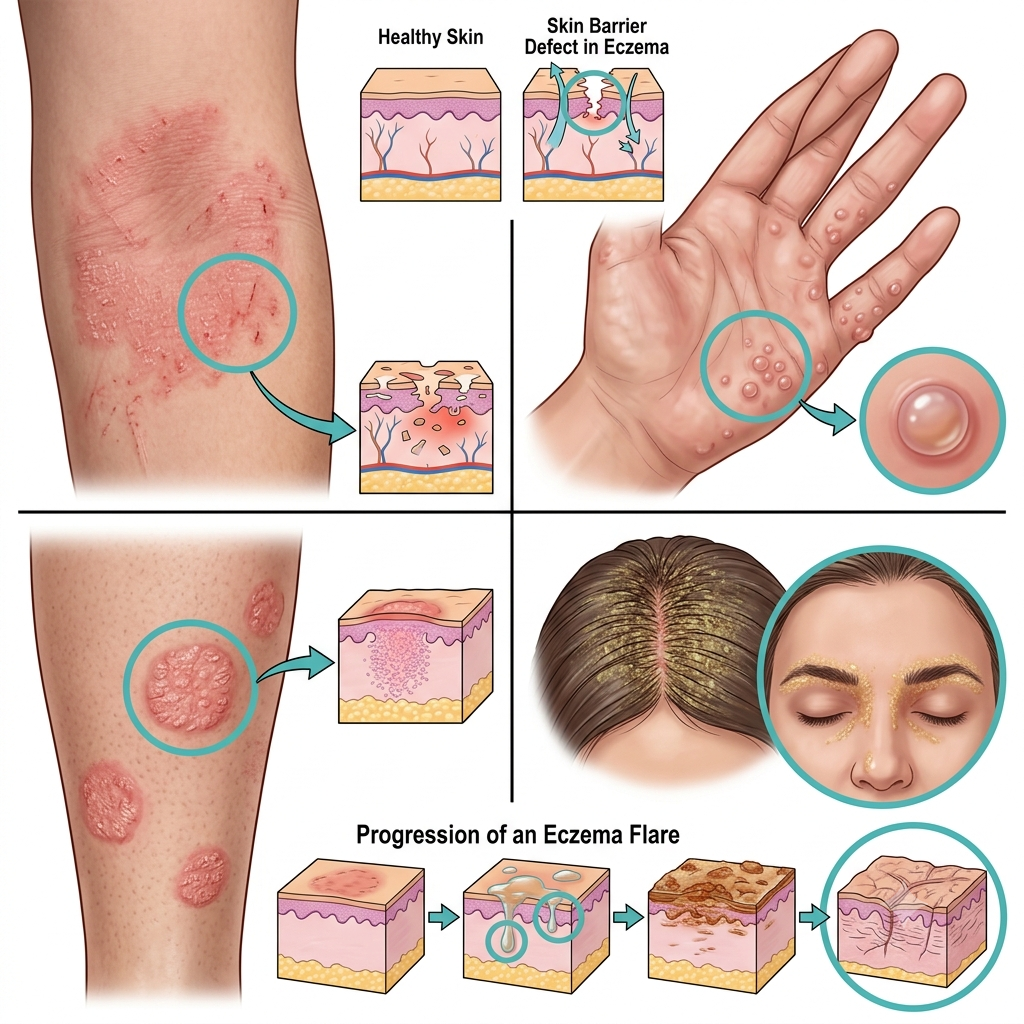
Disclaimer: All information and images are for educational purposes. Please consult a certified doctor for medical advice.
What Is Eczema?
Eczema (atopic dermatitis) is a chronic inflammatory skin condition characterised by red, itchy, and dry patches of skin. It is caused by a combination of genetic and environmental factors that impair the skin barrier and dysregulate the immune system.
People with eczema have skin that is less able to retain moisture and more susceptible to irritation and infection. The condition often runs in families and is commonly associated with other atopic conditions such as asthma and hay fever.
Eczema can appear anywhere on the body but most commonly affects the face, hands, inside the elbows, and behind the knees. It is not contagious.
Common Symptoms
Eczema symptoms vary by age and severity:
- Intense itching: Often worse at night, disrupting sleep.
- Dry, sensitive skin: The skin feels rough and tight.
- Red to brownish-grey patches: Especially on the hands, feet, ankles, wrists, neck, upper chest, and eyelids.
- Small, raised bumps: May leak fluid and crust over when scratched.
- Thickened, cracked skin: From chronic scratching (lichenification).
- Raw, sensitive skin: From scratching.
How Eczema Is Diagnosed
Your doctor will examine your skin and ask about your symptoms, medical history, and family history of allergies or asthma. There is no single test for eczema — diagnosis is based on the appearance of the skin and the pattern of symptoms. In some cases, patch testing may be used to rule out contact dermatitis.
Eczema Treatment Options
Treatment focuses on repairing the skin barrier, reducing inflammation, and managing triggers:
- Moisturisation: Fragrance-free, hypoallergenic moisturisers applied daily to restore the skin barrier.
- Topical corticosteroids: Prescription creams to reduce inflammation during flare-ups.
- Calcineurin inhibitors: Non-steroidal creams for sensitive areas like the face.
- Oral antihistamines: Help control itching, especially at night.
- Wet wrap therapy: For severe cases, under medical supervision.
- Trigger management: Identifying and avoiding personal triggers.
Common Eczema Medications
- Topical corticosteroids: Hydrocortisone, betamethasone, mometasone — reduce inflammation and itching.
- Topical calcineurin inhibitors: Tacrolimus, pimecrolimus — steroid-free options for sensitive areas.
- Oral antihistamines: Cetirizine, loratadine — for itching relief.
- Oral antibiotics: If the skin becomes infected from scratching.
- Biologics: Dupilumab — for moderate to severe eczema that does not respond to other treatments.
Lifestyle & Home Care for Eczema
- Bathing: Take short, lukewarm baths or showers. Pat skin dry — do not rub.
- Moisturise immediately: Apply moisturiser within 3 minutes of bathing to lock in moisture.
- Choose gentle products: Use fragrance-free, dye-free cleansers and laundry detergents.
- Wear soft fabrics: Cotton and bamboo are best. Avoid wool and synthetic fibres next to the skin.
- Control temperature: Avoid overheating. Keep your home cool and humidified.
- Nail care: Keep nails short to minimise damage from scratching.
- Stress management: Stress is a known trigger — incorporate relaxation techniques.
Frequently Asked Questions About Eczema
Is eczema contagious?
+Can eczema be cured?
+What triggers eczema flare-ups?
+Is eczema the same as dry skin?
+Living with Eczema?
Find relief with a personalised treatment plan. Book your appointment at Lovina Clinic today.
WhatsApp Us