Keloid
Learn about keloid causes, symptoms, and treatment options. Understand why raised scars form and how to reduce their appearance at Lovina Clinic.
Book Appointment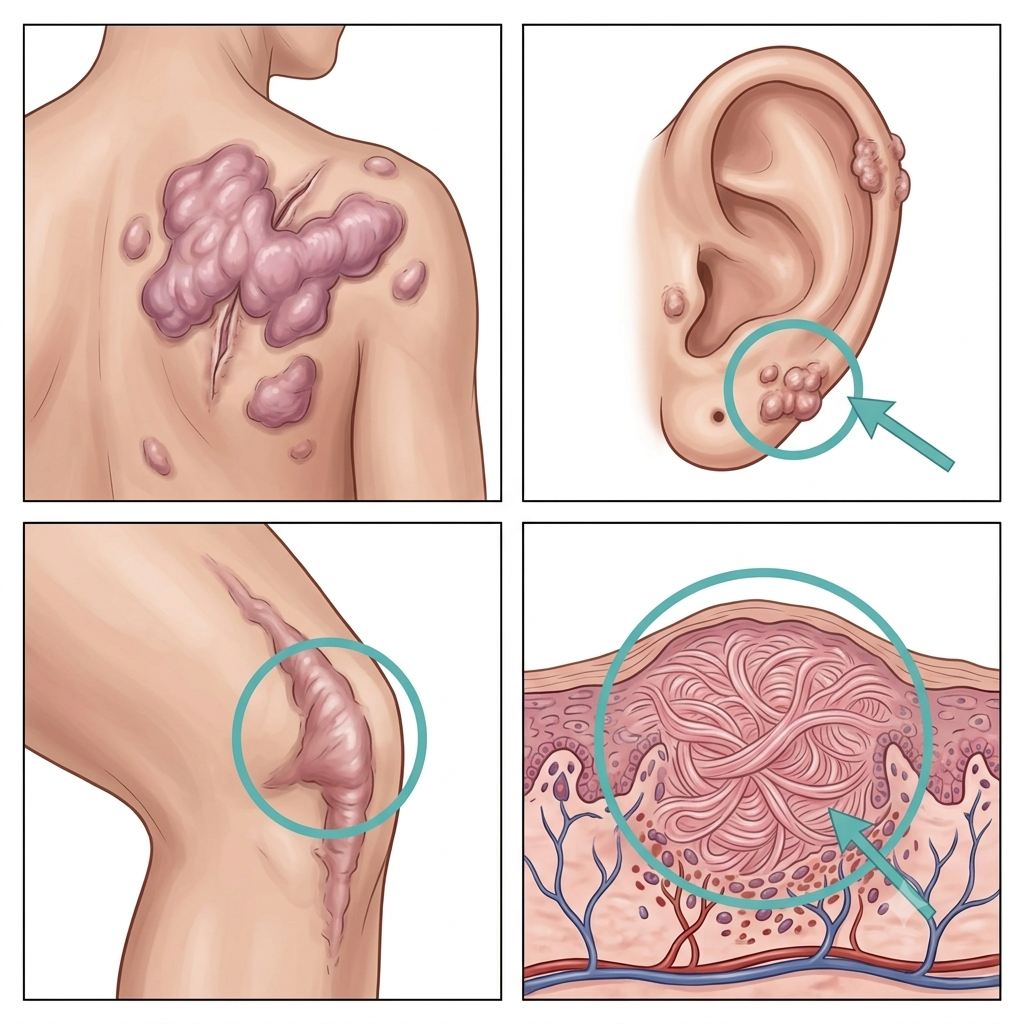
Disclaimer: All information and images are for educational purposes. Please consult a certified doctor for medical advice.
What Is a Keloid?
A keloid is a raised, thickened scar that extends beyond the boundaries of the original wound. Unlike normal scars that remain within the wound boundary, keloids grow outward and continue to grow over time. They are caused by an overproduction of collagen during the healing process.
Keloids can develop after any skin injury — surgery, piercings, burns, acne, insect bites, or even minor scratches. They are benign but can be itchy, painful, and cosmetically concerning. Some people are genetically predisposed to keloid formation.
Common Symptoms
- Raised, thickened scar: Extends beyond the original wound area.
- Gradual growth: Keloids may grow slowly over weeks or months.
- Itching: Often itchy, especially during the active growth phase.
- Pain or tenderness: Some keloids are sensitive to touch.
- Colour variation: Can be pink, red, purple, or darker than surrounding skin.
- Shiny, hairless surface: The skin over a keloid is typically smooth and hairless.
How Keloids Are Diagnosed
Your doctor can diagnose a keloid through a physical examination. The characteristic appearance — a raised scar that extends beyond the wound boundary — is usually sufficient for diagnosis. Your doctor will also ask about your history of injuries, surgeries, and any family history of keloids. In rare cases, a biopsy may be performed to rule out other types of skin growths.
Keloid Treatment Options
Treatment depends on the size, location, and age of the keloid:
- Corticosteroid injections: Flatten and soften the keloid over several sessions.
- Cryotherapy: Freezing reduces the size of the keloid.
- Laser therapy: Improves colour and texture.
- Silicone sheets or gel: Softens and flattens the scar with daily use.
- Surgical removal: Often combined with other treatments to prevent recurrence.
- Compression therapy: Pressure dressings to flatten the scar.
Combination therapy is often the most effective approach.
Common Keloid Treatments
- Corticosteroid injections: Triamcinolone acetonide — injected directly into the keloid.
- 5-Fluorouracil (5-FU): Antimetabolite injected into the keloid, often combined with steroids.
- Interferon therapy: Reduces collagen production.
- Silicone gel: Applied daily to soften and flatten the scar.
- Topical steroids: May be prescribed for mild keloids or maintenance.
Prevention & Home Care
- Avoid unnecessary skin trauma: Including piercings and tattoos if you are prone to keloids.
- Early treatment: Treat wounds and acne promptly to minimise inflammation.
- Pressure earrings: After earlobe keloid removal, pressure earrings help prevent recurrence.
- Sun protection: Protect healing scars from sun exposure to prevent hyperpigmentation.
- Massage: Gentle massage of healed scars may help soften the tissue.
Frequently Asked Questions About Keloids
Are keloids dangerous?
+Do keloids go away on their own?
+Why do keloids happen?
+Can keloids come back after treatment?
+Bothered by a Keloid?
Book a consultation at Lovina Clinic. Our doctor will assess your keloid and recommend the most effective treatment plan.
WhatsApp Us