Fungal Skin Infections
Learn about fungal skin infections — causes, symptoms, types, and treatment options. Effective diagnosis and treatment at Lovina Clinic.
Book Appointment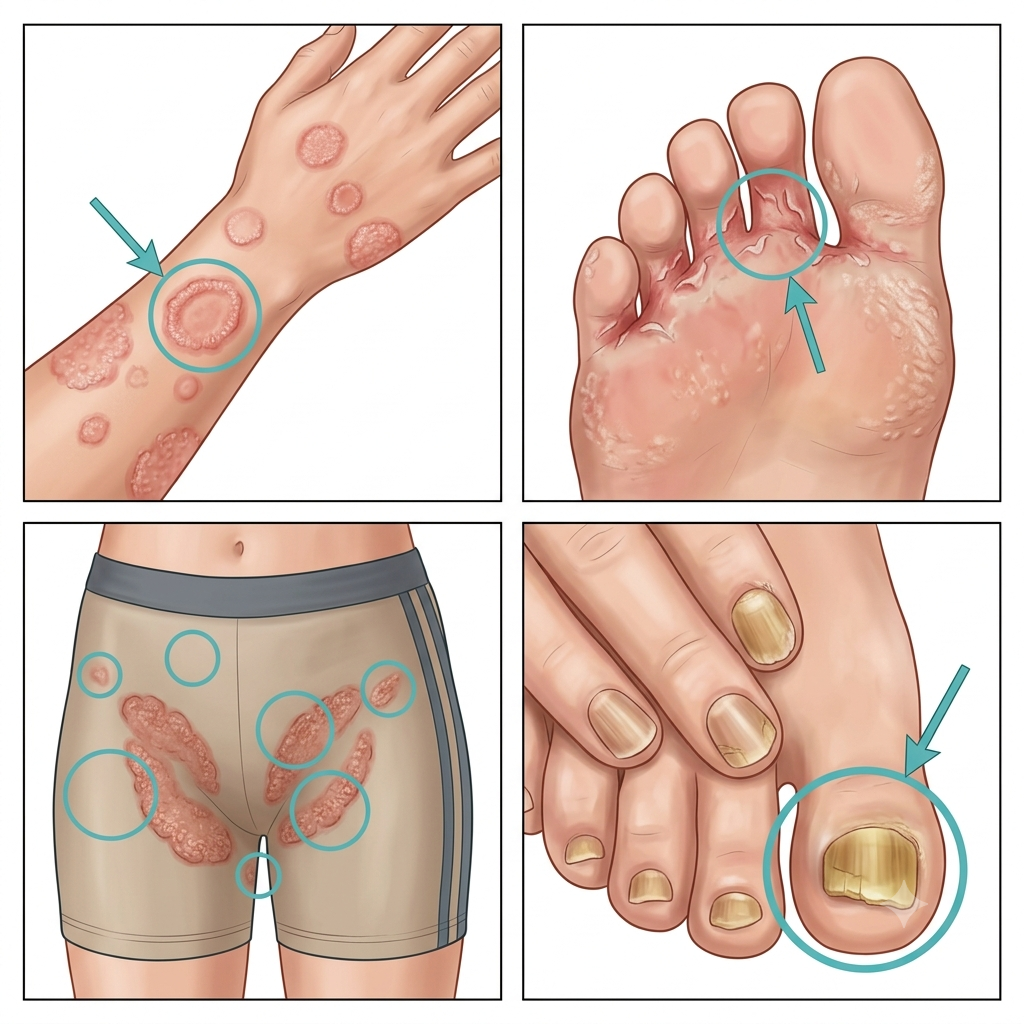
Disclaimer: All information and images are for educational purposes. Please consult a certified doctor for medical advice.
What Are Fungal Skin Infections?
Fungal skin infections are caused by microscopic organisms called dermatophytes that thrive on keratin — a protein found in skin, hair, and nails. These fungi grow best in warm, moist environments, which makes Malaysia's tropical climate particularly conducive to fungal infections.
Common types include ringworm (tinea corporis), athlete's foot (tinea pedis), jock itch (tinea cruris), scalp ringworm (tinea capitis), and nail fungus (onychomycosis). Despite the name, ringworm is not caused by a worm — it is a fungal infection that creates a ring-shaped rash.
Common Symptoms by Type
Symptoms vary depending on the location of the infection:
- Ringworm (body): Red, ring-shaped rash with raised, scaly borders. The centre may be clear. Itchy.
- Athlete's foot: Itching, burning, and cracking between the toes. Red, scaly, and sometimes weeping skin.
- Jock itch: Red, itchy rash in the groin and inner thigh area. Often has a raised border.
- Scalp ringworm: Scaly, itchy patches on the scalp with hair breakage or bald spots.
- Nail fungus: Thickened, discoloured (yellow, white, brown), brittle nails. Nail may separate from the nail bed.
- Panau (tinea versicolor): White or light-coloured patches on the chest, back, or arms. Caused by a different type of yeast, Malassezia.
How Fungal Infections Are Diagnosed
Your doctor can often diagnose a fungal infection by examining the affected area. The characteristic appearance of ring-shaped, scaly patches is usually distinctive. To confirm the diagnosis, the doctor may take a skin scraping or nail clipping and examine it under a microscope, or send it to a laboratory for culture. This helps identify the specific type of fungus and guide treatment.
Fungal Infection Treatment Options
Treatment depends on the location and severity of the infection:
- Topical antifungal creams and powders: Clotrimazole, miconazole, terbinafine — applied directly to the affected skin for 2 to 4 weeks.
- Oral antifungal medications: Terbinafine, fluconazole, itraconazole — for stubborn, widespread, or nail infections.
- Antifungal shampoo: Ketoconazole shampoo for scalp infections.
- Nail treatment: Oral medication or medicated nail lacquer for nail fungus.
- Hygiene measures: Keeping the area clean and dry, changing socks and underwear daily, and avoiding sharing towels.
Common Antifungal Medications
- Terbinafine: Available as a cream for skin infections and oral tablets for nail and stubborn infections.
- Clotrimazole: Over-the-counter cream for mild skin fungal infections.
- Miconazole: Available as cream, powder, or spray.
- Ketoconazole: Available as cream, shampoo, and oral tablets.
- Fluconazole: Oral medication for systemic fungal infections.
- Griseofulvin: Oral medication for scalp and nail infections that do not respond to other treatments.
Prevention & Home Care
- Keep skin dry: Dry yourself thoroughly after bathing, especially between the toes and skin folds.
- Breathable fabrics: Wear cotton underwear and socks. Avoid tight, synthetic clothing.
- Change daily: Change socks and underwear daily. Wash towels and bedding regularly in hot water.
- Avoid sharing: Do not share towels, combs, shoes, or clothing with others.
- Footwear in public areas: Wear sandals or flip-flops in public showers, pools, and gym changing rooms.
- Antifungal powder: Use in hot, humid weather to keep skin dry.
- Complete treatment: Finish the full course of treatment even if symptoms improve, to prevent recurrence.
Frequently Asked Questions About Fungal Infections
Are fungal infections contagious?
+How long does fungal infection treatment take?
+Can I treat a fungal infection at home?
+How do I prevent fungal infections from recurring?
+Dealing with a Fungal Infection?
Get effective treatment and fast relief. Book your appointment at Lovina Clinic today.
WhatsApp Us